ECS-B2026-11-23
What weather can throw off an annual fleet flyover
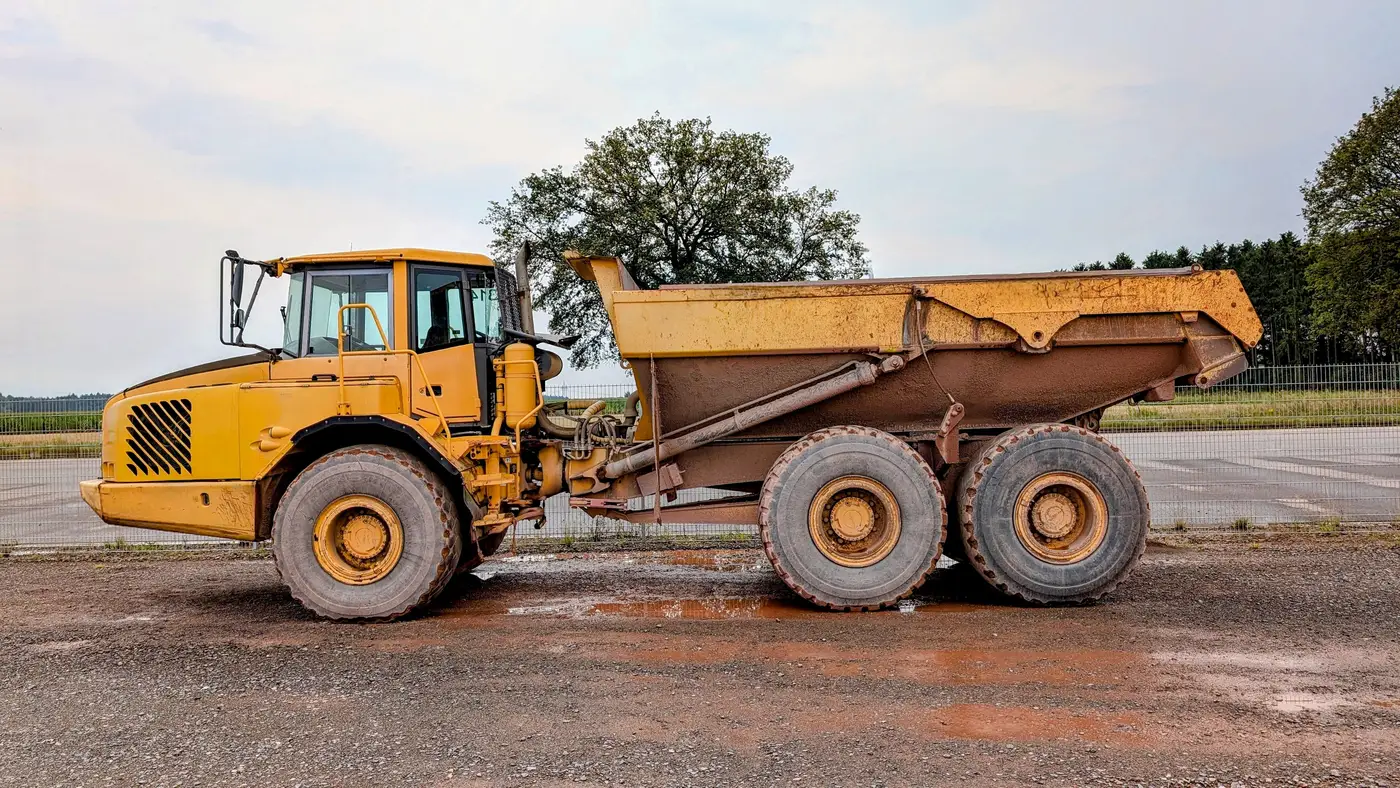
A lot full of graders, loaders and skid steers looks the same from 400 feet whether it's 60 degrees and dry or three days after a front moved through. It isn't. An annual condition flyover is reading surface paint, oxidation patterns, rust bloom at seams and fastener lines, and those cues only show up clean under the right ground conditions. Weather is the variable most remarketers don't think about until a flight comes back unusable.
Snow cover hides the thing you're grading
Even an inch of snow on a flatbed or a dozer blade erases the surface detail a condition read depends on. Paint fade, chalking, and the rust streaks that run off a bolt head are all surface-level findings, and snow sits right on top of that surface. A yard in the Upper Midwest or the mountain West can lose a two- to three-month window every winter where a flight simply can't be flown for grading purposes, even though the aircraft could technically fly.
Frost is a lighter version of the same problem. A heavy frost that hasn't burned off by midmorning will flatten contrast on painted sheet metal just enough to mask early oxidation, which is exactly the stage a remarketer wants to catch before it turns into a bigger writedown at auction. If your yard sits somewhere with long, slow-thawing mornings well into spring, the practical flyover window is narrower than the calendar suggests.
Wet-surface rust read problems
Rain creates a different distortion. A machine that's still wet from an overnight shower reflects light unevenly: rust that's actually orange-brown can photograph closer to black, and a wet hood can mask hairline paint cracking that would be obvious dry. Puddling on flatbeds and low-deck trailers adds glare that competes with the surface detail a sub-10 cm pass is trying to pick up.
This matters more for yards that store equipment outdoors with no cover, which is most remarketing lots. The gap between "it rained three days ago" and "the metal has fully dried and oxidized back to its normal appearance" varies by humidity and machine type, but a day or two of drying time after a storm is the safer bet before scheduling a pass. Flying the morning after a storm clears usually means flying too early.
Picking a flyover window
Wind matters less for fixed equipment than people assume, since a parked fleet doesn't move the way a crop canopy does, but high wind still kicks up dust on gravel lots, and dust on a lens or a sensor path reads the same as haze on a humid day. Low sun angle in late fall and winter throws long shadows across rows of parked equipment, which can obscure one side of a machine entirely depending on how the lot is oriented.
In practice, the cleanest annual pass tends to land in a window with no snow on the ground, at least a day of dry weather behind it, and a flight time late enough in the morning that frost and dew have burned off but early enough that shadows aren't stretching across half the row. For a lot in a region with real winters, that often means the flyover gets scheduled in a spring or fall shoulder window rather than whenever it's convenient on the calendar. Lots further south or in arid regions have more flexibility year-round, but the same dry-surface, low-shadow logic still applies.
None of this is a reason to skip the annual read. It's a reason to treat the scheduling window as part of the grading process, not an afterthought. A remarketer who books the flight for a clear week in October or April gets a cleaner surface-condition read than one who books whatever date happens to be open on the drone operator's calendar.
Equipment Condition Scoring is built around exactly this kind of surface and vintage read, turning an annual flyover into a graded machine roster ranked by how close each unit sits to end of economic life. If your region has a real winter or a wet season, it's worth planning that flight around the weather instead of around the calendar.