ECS-B2026-10-13
What is end of economic life for heavy equipment?
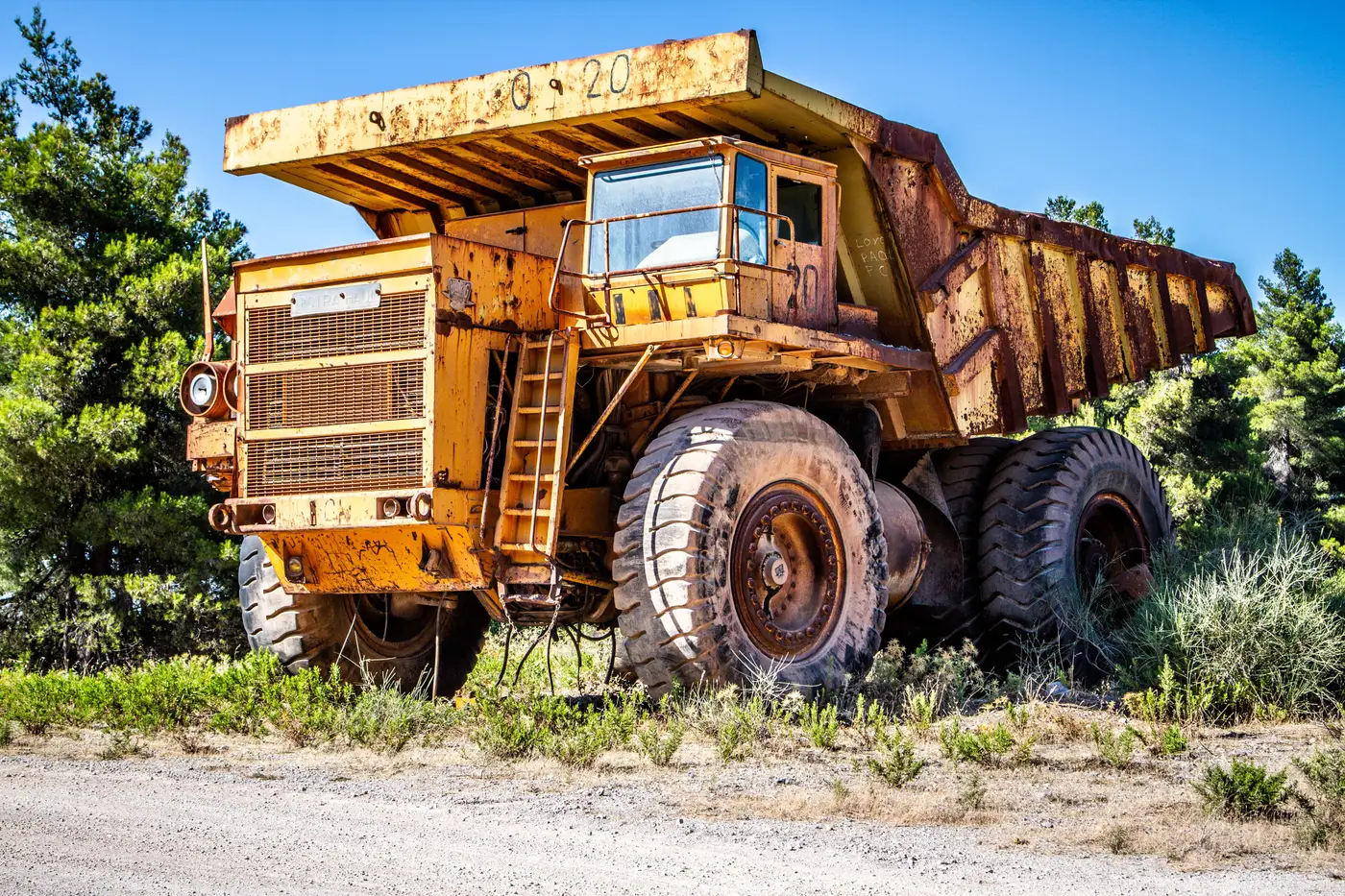
Ask ten people in equipment finance what "end of economic life" means and you'll get ten slightly different answers, most of them correct. A machine hits end of economic life when it costs more to keep running than it's worth keeping, no matter what the hour meter says. The math flips before the machine quits.
A 2014 wheel loader with 11,000 hours can still dig. The engine turns over, the hydraulics hold pressure, the frame hasn't cracked. But if downtime, repair bills, fuel burn, and falling resale value now outweigh what the machine earns on a job, it's past its economic life even though it's nowhere near done physically. That gap between "still runs" and "still worth running" is the whole concept.
Economic life vs. physical life
Physical life is mechanical. It's the point a machine actually can't do the work anymore, frame fatigue, engine failure, a transmission that won't hold. Physical life for well-maintained construction equipment often runs 15, 20, sometimes 25 years depending on the class and duty cycle.
Economic life is financial, and it's almost always shorter. It's shaped by things that have nothing to do with whether the machine still runs:
- Maintenance and repair costs climbing as the model generation ages out of easy parts supply
- Resale value sliding faster once a machine crosses into an older design era
- Productivity gaps against newer models with better fuel economy or automation
- Downtime risk rising as hours accumulate, even on a well-kept unit
A remarketer valuing a fleet cares about economic life first. A machine can be mechanically sound and still be a drag on the balance sheet if it's sitting past the point where holding it still pencils out.
Why this distinction matters for valuation
Get the two confused and you'll misprice a whole fleet two ways. Pull a machine too early, based on hours alone, and you leave resale value on the table. Hold it too long waiting for it to physically fail, and you eat depreciation, downtime, and a buyer pool that's thinned out because the model generation has aged past what most operators want.
Lenders run into the same problem from the other side. A loan collateralized against a machine near end of economic life carries more risk than the hour meter alone suggests, because resale value at repossession won't match book value. End of economic life equipment valuation tracks where a unit sits on that resale curve today, and that curve moves on its own timeline, separate from whatever the odometer reads.
The trouble is that economic life doesn't show up on a spec sheet. It shows up as a combination of model-generation cues, how a unit has aged against its peers, and the wear visible on the exterior, panel condition, paint fade, rust at seams, the kind of surface read that used to mean sending someone to the yard with a clipboard.
Estimating it without a shop inspection
A full fleet walkthrough tells you a lot, but it's slow and it doesn't scale past a handful of sites. The alternative is reading what a machine's generation and surface condition already say from imagery, without putting a technician on every unit first.
Equipment Condition Scoring is built for exactly that read: a graded roster per site that infers model era and condition grade from a sub-10 cm annual flight, then ranks the fleet by how close each machine sits to end of economic life. It gives a remarketer or lender a defensible starting point before a resale decision, a trade-in appraisal, or a loan review, the kind of read that tells you which units deserve a mechanic's signoff first.
If you're staring down a fleet valuation and need to know where to start looking, that's the question this is built to answer.