ECS-B2026-10-14
Undercarriage wear vs. track sag: reading crawler dozers from the air
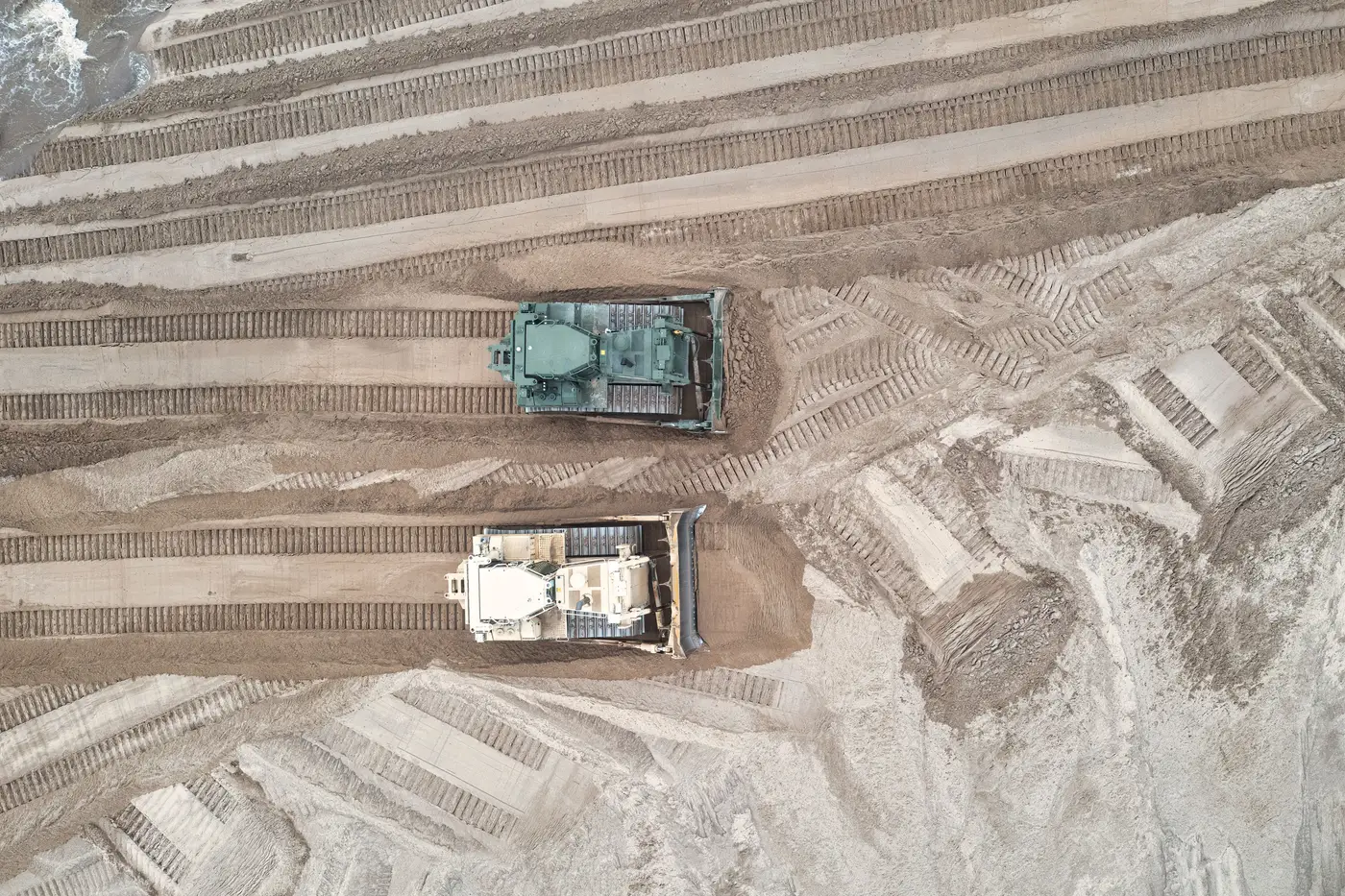
A dozer sitting on a yard pad can look rough in a single overhead frame and still have another few thousand hours left in the undercarriage. Or it can look tight and square and be two months from a full chain-and-sprocket swap. The difference matters a lot when you're grading a fleet for resale, and from altitude the two things that cause that look, track sag and actual undercarriage wear, can blur together if you don't know what you're looking at.
Track sag is an adjustment issue. Somebody let the tension down, or the idler cylinder lost grease pressure, and the top of the chain has more droop between the front idler and the carrier rollers than it should. Wear is a metal-loss issue. Pins, bushings, rollers, sprockets and shoes have worn material off themselves, pitch has stretched, and that chain is closer to the end of its working life no matter how you adjust it. One is a five-minute fix with a grease gun. The other is a parts bill that can run into five figures on a large dozer.
Track sag is a tension problem, not a wear problem
From the air, sag shows up as a visible gap or droop in the top run of the chain between the idler and the first carrier roller. On a well-adjusted track that top run sits close to flush. On a loose one you'll see a shadow line or a dark gap under the chain even in flat midday light, because the chain has dropped away from the frame rail.
The thing to remember is that sag can be present on a chain with plenty of life left, and absence of sag doesn't mean the chain is new. A yard crew tightens track before a sale walk-through all the time. So sag by itself tells you about maintenance discipline on that unit, maybe about how it's been stored, but it doesn't tell you what the chain itself is worth.
What actual undercarriage wear looks like from overhead
Wear leaves different marks, and most of them are about surface condition rather than geometry. A polished, worn shine on the link rails, where they've been running against the rollers, is one tell, set against a duller cast finish on a chain with low hours. Rust bleed around the pin and bushing joints is another, and it usually means the bushings have turned and the seal is gone. Pitch spacing is a third marker: on a badly stretched chain the links start to sit unevenly, almost like a slightly crooked zipper, instead of a tight even repeat down the length of the track.
Shoe wear is its own tell. A shoe that's been ground thin shows a lighter, more reflective edge where the grouser has rounded off, and the shoe width itself reads narrower against the roller frame than it would on a fresh set. Idler and sprocket wear show as a visible step or shoulder where the tooth profile has worn away from its original cut, which catches shadow differently than a sharp new tooth would.
Reading the two apart in the same frame
The practical trick is to separate geometry from surface. Sag is about the line the chain makes against the frame. Wear is about the texture and finish of the metal itself, at the pin joints, on the rail faces, along the shoe edges. A unit can have tight geometry and worn surfaces, or loose geometry and clean surfaces, and those two units are not the same risk on a resale sheet even though a quick glance might file them both under "rough undercarriage."
This is the read Equipment Condition Scoring builds a fleet roster around. A sub-10 cm annual flight picks up the surface cues, rust bleed, rail polish, shoe edge wear, and the model-generation cues that put an age bracket on the machine, then ranks each unit by how close it sits to the end of its economic life. It's a different question from "has someone adjusted the track lately," and it's the one that actually moves a resale number.
If you're grading a yard full of crawler dozers and want that read without walking every unit, see how a graded roster comes together.